
Early beginnings in Colombia

Elsy Buitrago-Delgado’s fascination with biology began during her childhood in Colombia, a country renowned for its extraordinary biological diversity. Surrounded by nature’s remarkable richness, she developed a deep appreciation for the diversity of life and a curiosity about the evolutionary processes that shape living organisms.

During her studies in Tunja at Universidad Pedagógica y Tecnológica de Colombia (UPTC), and in Bogotá at the Universidad Nacional de Colombia UNAL, she investigated the origin and evolution of orchids. Elsy became captivated by a fundamental question that continues to inspire her research today: How does a single cell give rise to a complex organism? This curiosity led her to explore the principles of developmental biology and the mechanisms that govern the emergence of biological form and complexity.

As a member of the Theoretical Biology Group, she developed a passion for the philosophy and history of science, exploring how scientific ideas evolve and how model organisms have transformed our understanding of development and human disease. These experiences inspired her to pursue a career dedicated to uncovering the fundamental principles that govern how cells communicate, make decisions, and self-organize to build an organism.

Watercolor map of Colombia

Moving to USA

Driven by her dream of uncovering the molecular mechanisms that govern the development of a complex body plan, Elsy Buitrago-Delgado made the life-changing decision to learn English, leave Colombia, and continue her scientific training in the United States.

She pursued her Ph.D. at Northwestern University in the LaBonne Lab, where she received extensive training in molecular and developmental biology. Her doctoral research focused on understanding the developmental origins of neural crest cells, one of the most versatile and evolutionarily important cell populations in vertebrate embryos. Through this work, she proposed a new model for neural crest formation, providing important insights into the mechanisms that regulate cell identity and developmental decisions.

In 2025, Elsy was honored as one of the 125 most distinguished graduate students in the history of the Graduate School at Northwestern University, recognizing her scientific contributions and the lasting impact of her graduate research.

Watercolor map of the United States

Postdoc

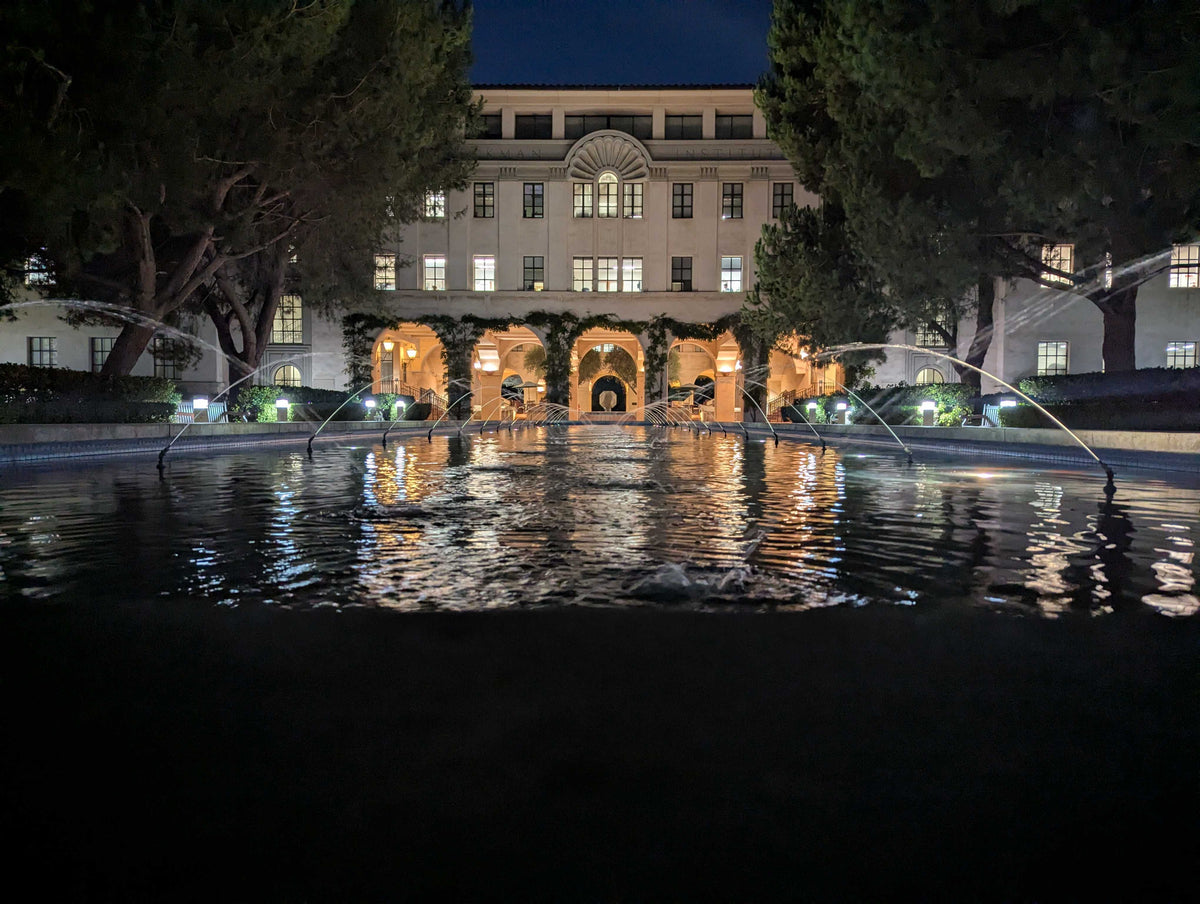
During her postdoctoral studies in the Cai Laboratory at Caltech, Elsy Buitrago-Delgado applied spatial genomics approaches to uncover how the organization and abundance of molecular components coordinate early cell fate decisions during embryogenesis. She was awarded the prestigious Hanna H. Gray Fellowship from the Howard Hughes Medical Institute in her first year of postdoctoral training and contributed to a multi-laboratory effort that quantitatively defined the signaling dynamics guiding early human development. During this period, she was also recognized as one of the 100 most inspiring Latinx by Cell Press for her contributions to developmental biology.

Spatial genomics image of cell nuclei in an embryo

Establishing a research laboratory at UCSD Postdoc

As a new faculty member at the UC San Diego School of Medicine, Elsy Buitrago-Delgado leads the Buitrago-Delgado Lab, where her team investigates the fundamental mechanisms that govern cell fate decisions and developmental transitions during mammalian embryogenesis. By integrating experimental and computational approaches, her research aims to uncover the molecular, mechanical, and signaling principles that shape the emergence of a complex organism. Her work has the potential to transform our understanding of human reproductive biology by revealing the mechanisms underlying early developmental decisions and why many pregnancies fail during the earliest stages of gestation. As a woman and Latina scientist, Elsy is committed to building an inclusive and innovative research environment that inspires and trains the next generation of scientists. Through her interdisciplinary approach, she mentors future leaders in developmental biology and empowers researchers to pursue transformative questions at the frontiers of biology.

Scripps Pier at sunset